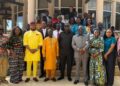
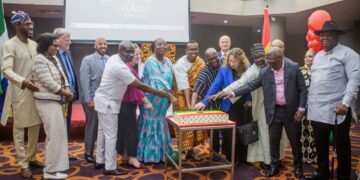


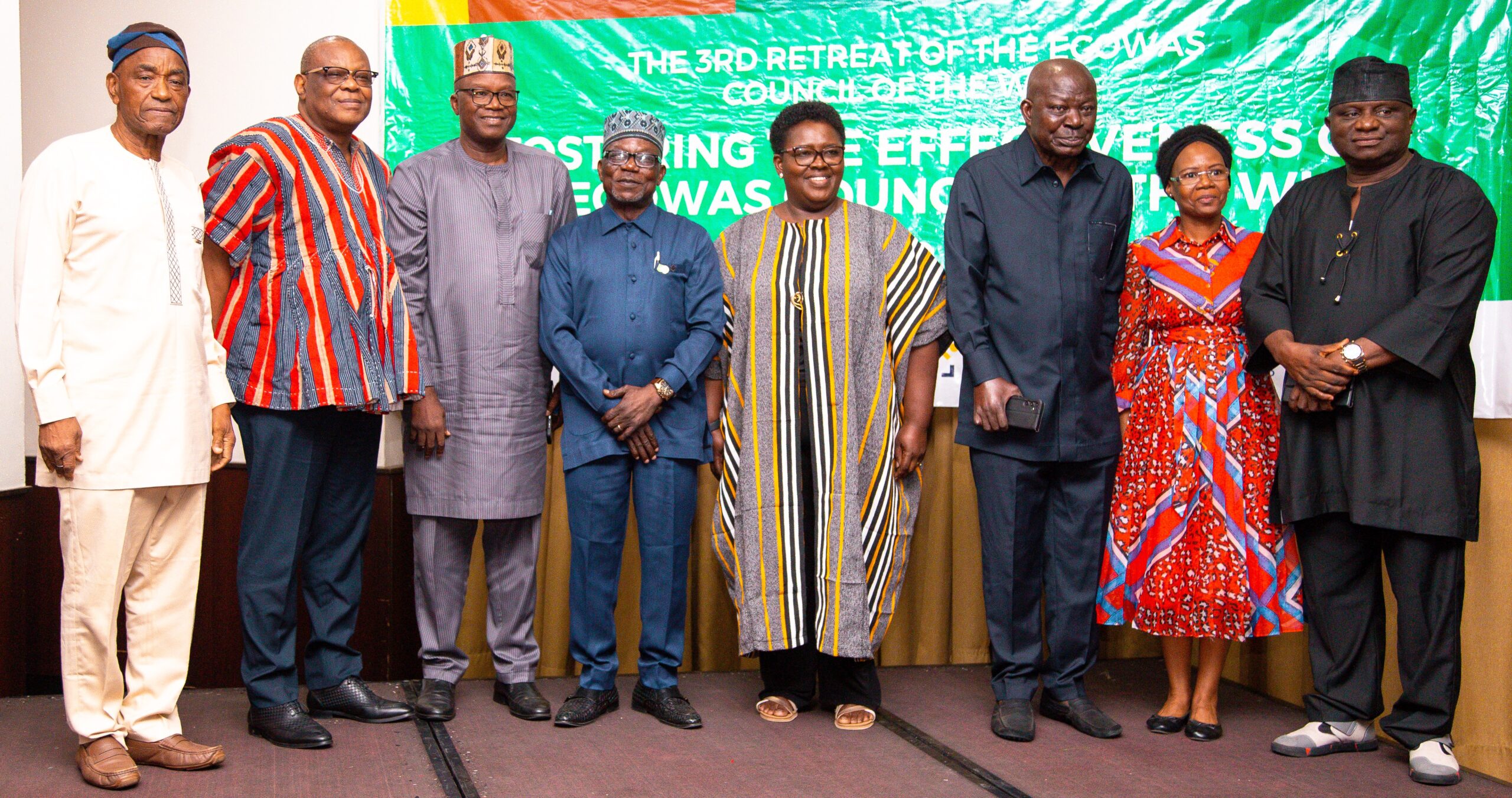
The ECOWAS Commission has commended its Council of the Wise for untiring, selfless services rendered to the regional community in pursuit of peace, security greater stability. The commendation was given by the ECOWAS Commission’s Commissioner, Political Affairs, Peace and Security Amb Abdel-Fatau Musah in a valedictory session at the end of the third Retreat of the ECOWAS Council of the Wise on the 18 March 2026, in Accra, Ghana.

The current ECOWAS Council of the Wise was constituted in May 2021. Commissioner Musah stated in his closing remarks that members of the Council may have come to the end of their service but not the end of service to the regional community. He stressed that the Commission looks forward to their continuous support and to sharing in their rich experiences while drawing strength from the wisdom gained over the years. “Your grasp of diplomacy has guided us through quite a number of storms. You have also alerted the commission of potential crisis which makes us take pre-emptive action in order to prevent escalation. You have given us a lot of materials that will guide the further development of the concept of the Council. The President of the Commission and all of us deeply appreciate this and If the history of conflict management and peace processes in our region are going to be documented, your names will be written in gold”. The Commissioner added.
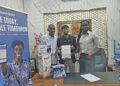
Speaking on behalf of Council Members, H.E. Hadja Alari Awahanatu Cole who represented the Council’ Chair, former President of Nigeria, H.E. Goodluck Ebele Jonathan thanked the ECOWAS Commission and particularly the Department of Political Affairs, Peace and Security (PAPS) for the opportunity to serve the Community. She urged all stakeholders of the peace process to take the submissions made at the retreat further in the conviction that the reflections and lessons learnt in the course of the Council’s engagements will help the cause of peace in West Africa, going forward. Before rounding up their work, the retreat participants had examined perspectives on governance, peace and security trends in the ECOWAS region, the adoption of a roadmap for the re-constitution of the Council of the Wise, among others. It also featured the presentation of commendation certificates and plaques to Council members. The two-Day Retreat was supported by the CMI–Martti Ahtisaari Peace Foundation, the European Union and the Deutsche Gesellschaft für Internationale Zusammenarbeit (GIZ).
Accra, Ghana, March 20, 2026 Page 2 / 3 Directorate of Communication 101 Yakubo Gowon Crescent • Asokoro District • P.M.B. 401 – Abuja • Nigeria www.ecowas.int PRESS RELEASE The ECOWAS Council of the Wise is a top-layer peacebuilding mechanism of PAPS engaged by the Mediation and Coordination of Regional Political Affairs Division for preventive diplomacy in aid of the larger peace and security architecture of the regional community.
—————END—————–
For further information, Kindly contact: Directorate of Communication, ECOWAS Commission Twitter: @ecowas_cedeao – Facebook: Ecowas-Cedeao www.ecowas.int
About ECOWAS
The Heads of State and Government of fifteen West African Countries established the Economic Community of West African States (ECOWAS) when they signed the ECOWAS Treaty on the 28th of May 1975 in Lagos, Nigeria. The Treaty of Lagos was signed by the 15 Heads of State and government of Benin, Burkina Faso, Côte d’Ivoire, The Gambia, Ghana, Guinea, Guinea Bissau, Liberia, Mali, Mauritania, Niger, Nigeria, Sierra Leone, Sénégal and Togo, with its stated mission to promote economic integration across the region. The Senegalese President was represented by the Minister for Foreign Affairs. Cabo Verde joined the union in 1977. The only Arabic-speaking Member Mauritania withdrew in December 2000. Mauritania recently signed a new associate-membership agreement in August 2017.
On January 29, 2025, Burkina Faso, Mali and Niger officially withdrew from ECOWAS. The current Member States of ECOWAS are Benin, Cabo Verde, Côte d’Ivoire, The Gambia, Ghana, Guinea, Guinea Bissau, Liberia, Nigeria, Sierra Leone, Sénégal and Togo. Considered one of the pillars of the African Economic Community, ECOWAS was set up to foster the ideal of collective self-sufficiency for its member states.
As a trading union, it is also meant to create a single, large trading bloc through economic cooperation. Integrated economic activities as envisaged in the area that has a combined GDP of $734.8 billion, revolve around but are not limited to industry, transport, telecommunications, energy, agriculture, natural resources, commerce, monetary and financial issues, social as well as cultural matters. In 2007, ECOWAS Secretariat was transformed into a Commission.
The Commission headed by the President, assisted by a Vice President, five Commissioners and the Auditor-General of ECOWAS Institutions, comprising experienced bureaucrats who are providing the leadership in this new orientation. The ECOWAS budget is essentially financed by revenue collected through the Community tax. The tax was introduced to finance its activities. The rate of the Community levy is set at 0.5% of the CIF value of goods imported from non-ECOWAS countries. As part of this renewal process, ECOWAS is implementing critical and strategic programmes that will deepen cohesion and progressively eliminate identified barriers to full integration. In this way, the estimated 300 million citizens of the community can ultimately take ownership for the realization of the new vision of moving from an ECOWAS of States to an “ECOWAS of the People: Peace and Prosperity to All”. by 2050.